There may not be a common template to compare to. The outcome will be a product that is faithful to the authorised design and maintains the quality anticipated of exquisite workmanship.
When the work is completely completed and polished, the tiniest features that may not be seen in previous manufacturing phases might pop out.
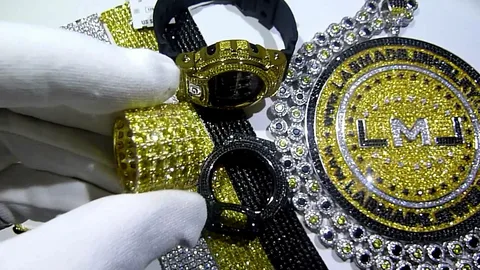
Gemstones must be inspected to ensure they are securely secured. This stage shows why Custom Jewelry Manufacturers is more than merely putting things together. It’s the delicate work of adjusting each piece until the jewellery feels right.
Inspection and the Final Shine Quality
Before reaching the wearer, personalised jewellery must pass a rigorous examination process. The jewellery should be a pleasure to see and operate as it is supposed to. A ring has to feel good on the finger, a pendant should hang right and earrings have to have the right balance.
The final shine is thus not only a matter of looks. This is the end of a sophisticated process of design, workmanship, refinement and focus on quality. They are getting more than just an accessory. They are seeing a concept, perhaps merely an idea, take on physical form.
Thus the gleam of the final work is greater than the shine of polished metal or of gleaming diamonds. They may influence the design, pick materials, include important details and create something that expresses their individuality. But these possibilities also depend on competence.
Each step has a function. Consultation makes sure that we understand what the consumer wants. Sketching turns inspiration into visual idea. Detailed design brings accuracy. The material chosen is the character of the composition. Design is translated into a tangible object by craftsmanship. Setting and finishing improve the detail. The last examination guarantees the completed jewellery to be ready to wear and to be appreciated.
It is this whole experience that makes handcrafted jewellery so remarkable. The final piece represents every choice made in its construction.
Modern technology has made it more flexible than ever. Digital modelling and modern production processes may give higher accuracy and new creative opportunities. But old-fashioned workmanship is still a need, since jewellery still requires the judicious judgement of human beings. Custom jewellery is essential to this transition. Instead than choosing a completed item from a conventional selection, clients may participate in producing jewellery according to their taste.
The future of personalised luxury is more than merely making jewellery appear different. It is about generating more meaningful connections between the buyer and the final work. A ring may reflect a personal milestone, a necklace might contain a memory, a bracelet might be a characteristic aspect of an individual’s style.
As customisation becomes more available, the distinction between designer jewellery and personal expression is blurring more and more. Customers may submit ideas and communicate with designers and visualise those ideas using technology before they become tangible.
This trend indicates that the importance of personalisation will continue to be a major driver in the future of luxury jewellery making. Those companies and manufacturers that are able to bring together innovation, technology, craftsmanship, quality and consumer cooperation will be ideally placed to satisfy shifting demands.
Digital Design is Changing the Way We Customise
One of the key developments in bespoke jewellery manufacture is the rise of digital design. Jewellery design was often done by hand drawings and real prototypes. These approaches still work, but digital instruments have injected more flexibility and accuracy into the creative process.
In the digital world, jewellery experts are now using computer-aided design to develop very realistic models before they are produced. Designers may experiment with forms, sizes, gemstone placements, settings and other aspects without having to make an actual prototype immediately.
This makes the design process collaborative. Customers may go at the planned item and provide input before manufacture begins. If they wish to alter dimensions, update a setting or tweak a detail, these modifications may be accomplished during the digital design stage.
Three-dimensional visualisation may also enable clients to comprehend how the completed jewellery could appear from various perspectives. This is particularly beneficial for complicated designs where a simple drawing may not fully describe the whole setup.
Digital technologies may assist with accuracy. Jewellery is done on a somewhat tiny scale therefore dimensions and proportions are of considerable importance. Digital modelling allows designers to work with exact specifications and to see possible problems before they go into production.
The proliferation of electronic devices does not equal the end of traditional handicraft. But technology is increasingly being employed side by side with conventional talents.
Advanced Manufacturing Provides Creative Possibilities
Manufacturing technology is another one of the areas predicted to impact the future of personalised jewellery. More advanced manufacturing technologies provide designers scope for more intricate and unusual shapes.
Complex structures that are difficult or time-consuming to make using standard manufacturing procedures alone may be handled by such advanced manufacturing techniques. This provides more room for experimentation with complex designs, unique proportions and very detailed components.
One major benefit is accuracy. Custom jewellery typically needs parts to fit together precisely, especially if a design has many components. Advanced manufacturing provides for uniform proportions with less waste of extraneous material.
Also, modern manufacturing may make the prototyping process more efficient. A digital version may be made and enhanced in the digital world before a physical version is generated. This lowers the need to re-do things after production has already started.
Here the link between technology and craftsmanship is especially crucial. Sophisticated technology may enhance precision and provide more options, but it’s still the design choices and the confidence that the jewellery will satisfy aesthetic and practical standards that are in the hands of trained specialists.
Flexible manufacturing may also help customisation. Traditional mass production is best suited to the manufacture of huge quantities of similar items. Custom jewellery is a whole separate business. Each item might have various specs.
Summary
More flexible Custom Jewelry Manufacturers technologies are being developed, and generating smaller batches or custom designs might become more realistic. This might enable personalised jewellery to transition from a highly specialised service to a more commonly accessible luxury item.
The consequence may be a jewellery sector in which personalisation is part of the production process rather than a restricted, separate service.